Independent journalism on Jharkhand’s politics, economy and society.

Karam – The Festival Where a Tree Becomes a Symbol of Life

In Jharkhand, the evening weather appears mild, although the daytime sun still scorches. It is the month of Bhado (Bhadra as per the Hindu lunar calendar, between August and September), just after the monsoons have receded. And on the 11th lunar day (Ekadashi) of Bhado falls the important festival of Karam, also colloquially known as Karma Parab.
This time of the year, a tree branch becomes the centrepiece of village life in various tribal cultures in Jharkhand, and beyond. It is carried from the forest, placed at the centre of the settlement, and surrounded by songs, drums and dancing. But Karam is about much more than the tree. For different Adivasi communities, it connects agriculture, fertility, oral history and the relationship between people and the natural world.
What is Karam? | करम क्या है?
Karam or Karma is a major Adivasi festival observed across parts of Jharkhand and neighbouring regions of eastern and central India. It is particularly associated with communities including Oraon, Munda, Ho and Santhal, although the ritual is not identical among them.
At the centre of the Karam festival is the Karam tree, scientifically known as Nauclea parvifolia or Adina cordifolia, and it is traditionally seen as a symbol of Karam Devta or Karamsani. It symbolises fertility, prosperity, and a good agricultural harvest. Communities believe the tree’s spirit tests human respect for nature and ethics, teaching that good character matters more than wealth.
The Karam festival is known by different names and is celebrated in Jharkhand, Chhattisgarh, Odisha, West Bengal, Madhya Pradesh, and Assam.
The agricultural connection | खेती और प्रकृति से संबंध
For many communities, Karam falls within the agricultural cycle. The festival comes at a period when the monsoon crop is growing, and communities are looking towards the eventual harvest.
Anthropological interpretations therefore connect the ritual with fertility, agricultural prosperity, regeneration and the relationship between people and their ecological surroundings.
As per a report in the Indian Express, the Oraon festival specifically connects Karam with the development of agriculture and seasonal farming practices in Chotanagpur.
The Main Rituals Associated with Karam
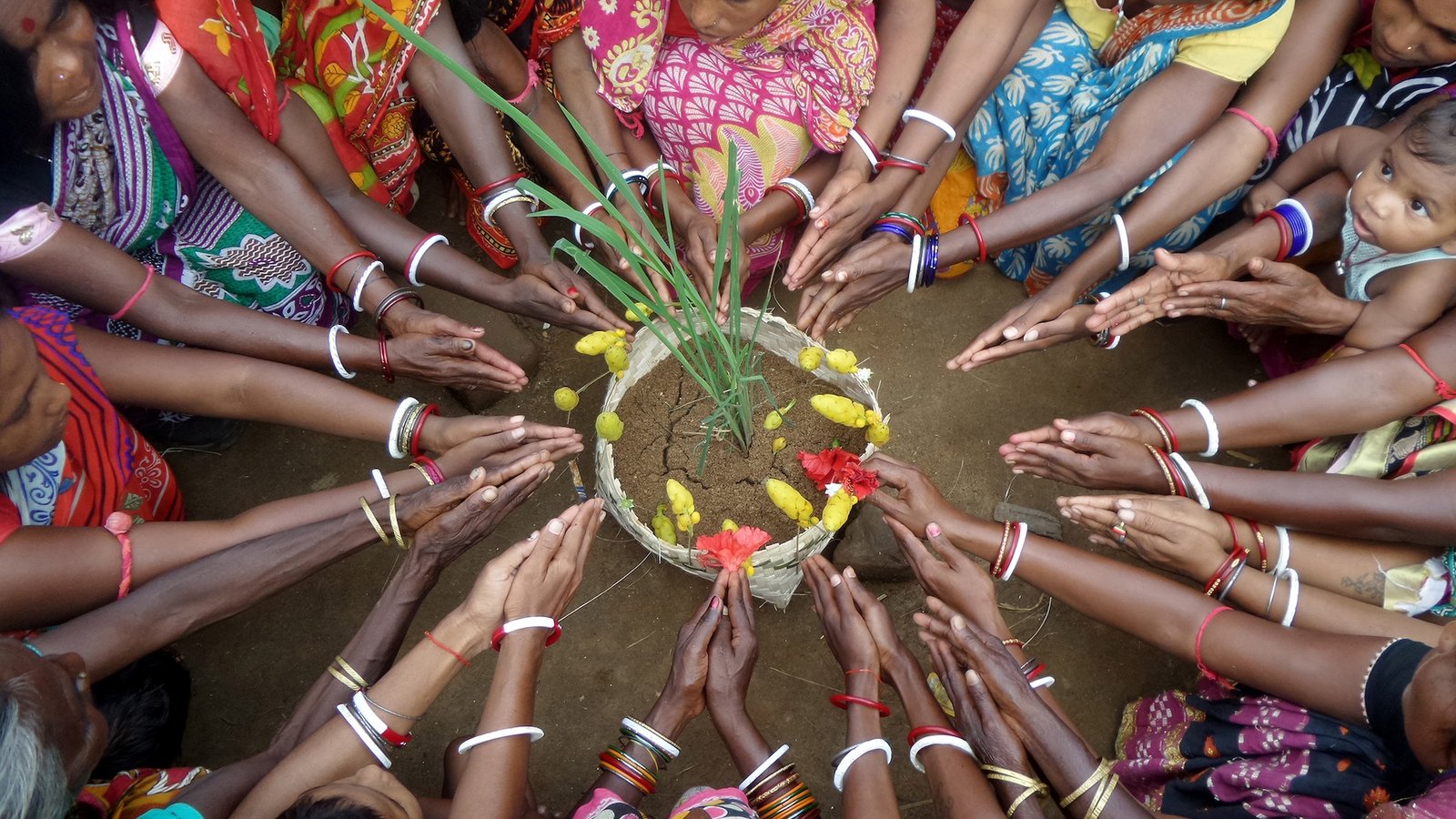
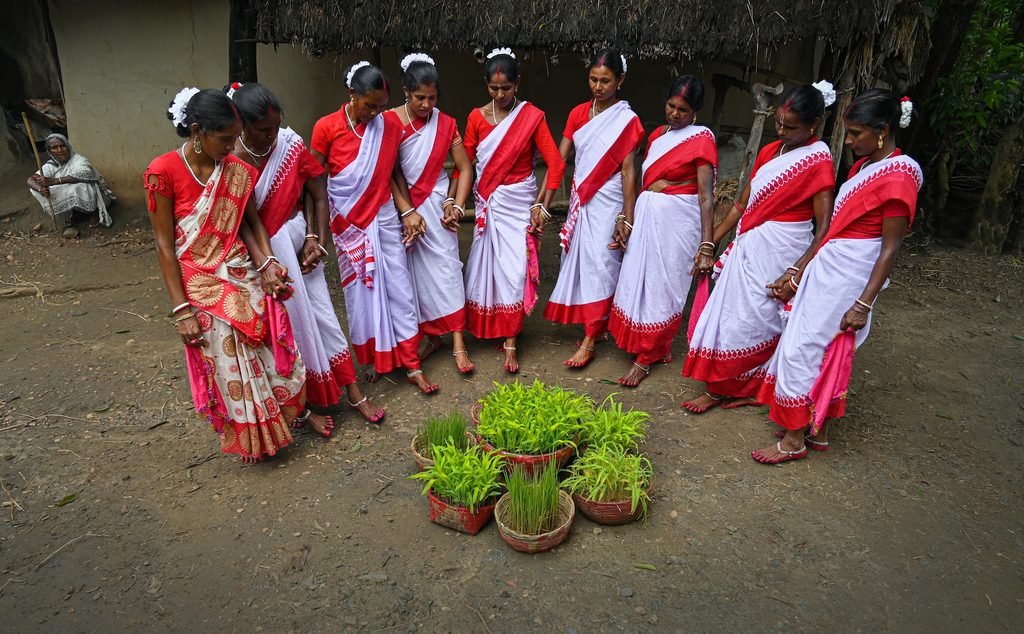
- Jawa Cultivation: Women plant nine types of seeds in small baskets (Jawa) and tend to them for 7 to 9 days before the puja.
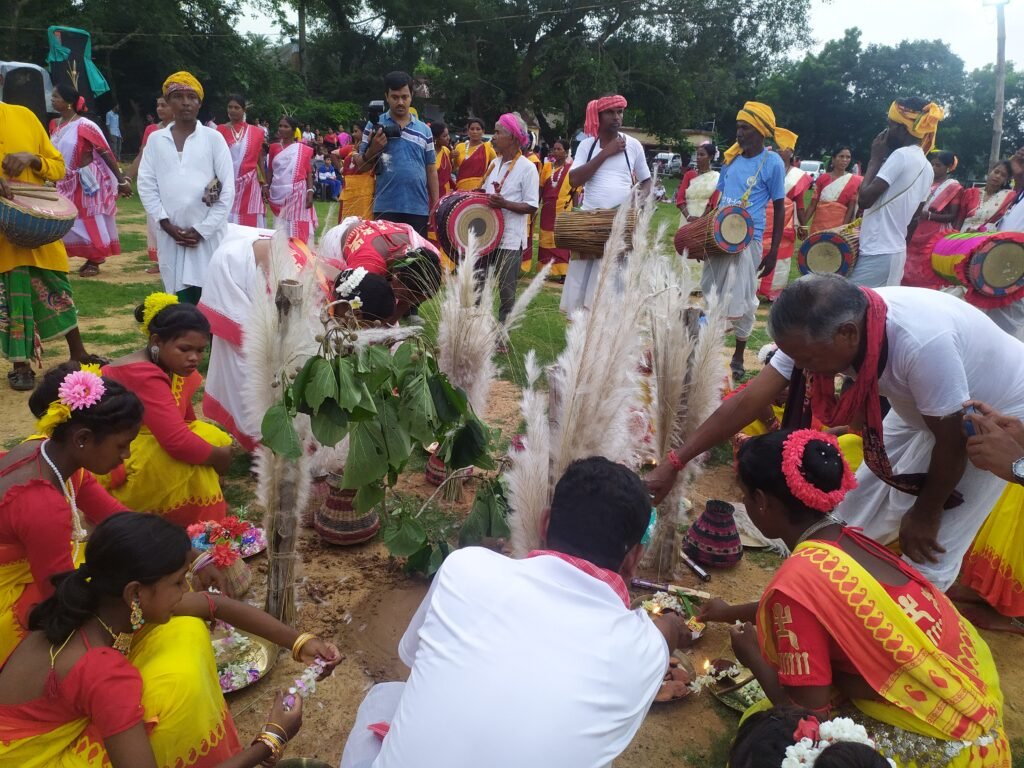
- Branch Cutting & Planting: Villagers go to the forest with drummers to bring back a sacred branch of the Karam tree, which is planted in the centre of the village courtyard or akhara.
- Fast and Legend: Sisters often keep a day-long fast (sometimes without water) for the health, well-being, and long life of their brothers. The village priest narrates traditional legends to the community.
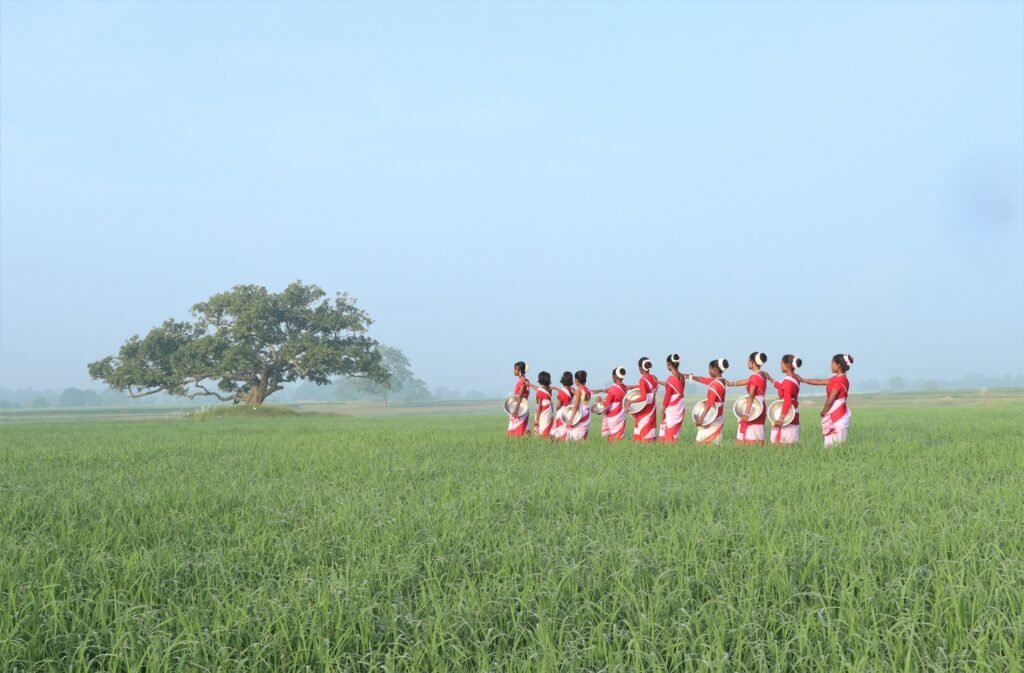
- Dance and Music: The night features vibrant traditional folk dances, drumming, and singing around the planted branch, which is immersed in a pond or river the next morning.
The Karam story and Karmu–Dharmu
As is usual in Indian traditions, where festivals are intertwined with age-old stories, different communities tell different versions of the Karam story.
During the Karam festival, the village priest (Pahan or Dehuri) recites the traditional Karam Katha (legends) to the gathered community around the sacred branch. While folklore varies from tribe to tribe, two major stories are widely told across regions like Jharkhand, Odisha, and West Bengal:
- The Story of Brothers Karmu and Dharmu: In one widely documented Santhal tradition, Karmu and Dharmu lose the Karam branch and subsequently experience misfortune; its recovery is associated with the restoration of prosperity.
- The Story of Seven Brothers: Among the Bhumijs and Oraons, a traditional legend tells of seven brothers whose youngest brother danced and sang around a Karam tree with his sisters-in-law, neglecting the brothers’ meals. Angered, the brothers threw the tree into a river, after which their crops failed, and misfortune befell the family. The youngest later found the Karam tree, worshipped Karam Devta, and prosperity was restored.
More Than Religion: One Festival, Many Traditions
Karam is more than a religious festival. Across communities such as the Oraons, Mundas, Santhals, Ho and others, it can serve as a social institution through which people reaffirm community ties, transmit oral traditions, celebrate agricultural life and connect younger generations with their cultural heritage.
Yet there is no single Karam tradition: its stories, rituals, songs and meanings vary between communities and regions. Understanding Karam in Jharkhand therefore requires looking beyond a common festival name to the distinct traditions and histories that communities have preserved and continually reshaped. What unites these diverse practices is not uniformity, but the festival’s continuing role in sustaining relationships between people, community, culture and the natural world.