Independent journalism on Jharkhand’s politics, economy and society.

Explained: CNT/SPT Acts in Simple Hindi & English


What are the CNT And SPT Acts? Why Do They Matter So Much In Jharkhand?
By Jharkhand Watch Desk
Whenever land rights, tribal identity, mining projects or state politics are discussed in Jharkhand, two terms repeatedly appear: the CNT Act and the SPT Act. Political parties promise to protect them, tribal organisations rally in their support, and any attempt to amend them often triggers widespread protests.
But what exactly are these laws, and why do they remain so important more than a century after they were introduced?
What Is The CNT Act?
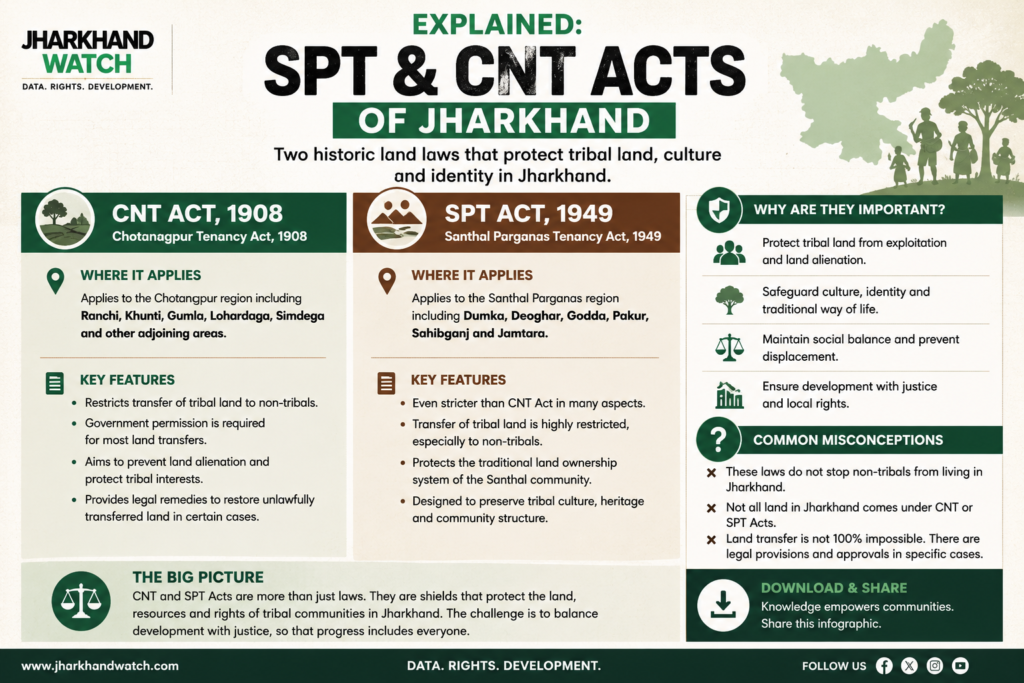
The Chotanagpur Tenancy (CNT) Act, 1908, is a land protection law that mainly applies to the Chotanagpur region, including districts such as Ranchi, Khunti, Gumla, Lohardaga and Simdega.
The law was introduced during British rule after repeated tribal uprisings against land alienation, exploitation by landlords and forced displacement.
Its central purpose is to protect tribal land from being easily transferred to non-tribal individuals or entities.
Under the CNT Act:
- transfer of tribal land is heavily restricted,
- land transactions often require official approval,
- and illegally transferred land can, in some cases, be restored through legal processes.
CNT Act क्या है?
छोटानागपुर काश्तकारी अधिनियम, 1908 (CNT Act) झारखंड के छोटानागपुर क्षेत्र में लागू एक महत्वपूर्ण भूमि कानून है। यह मुख्य रूप से रांची, खूंटी, गुमला, लोहरदगा और सिमडेगा जैसे जिलों में लागू होता है।
यह कानून ब्रिटिश शासन के दौरान बनाया गया था, जब आदिवासी समुदायों में भूमि छिनने, जमींदारों के शोषण और विस्थापन के खिलाफ लगातार आंदोलन हो रहे थे।
इस कानून का मुख्य उद्देश्य आदिवासी भूमि को बाहरी लोगों या प्रभावशाली समूहों के कब्जे से बचाना था।
CNT Act के तहत:
- आदिवासी जमीन का हस्तांतरण आसान नहीं है,
- कई मामलों में सरकारी अनुमति जरूरी होती है,
- और अवैध भूमि हस्तांतरण को अदालत या प्रशासनिक प्रक्रिया के माध्यम से चुनौती दी जा सकती है।
What Is The SPT Act?
The Santhal Parganas Tenancy (SPT) Act, 1949 applies mainly in the Santhal Pargana region, including Dumka, Pakur, Sahibganj, Godda, Deoghar and Jamtara.
The SPT Act is generally considered stricter than the CNT Act. It was designed to preserve the traditional land ownership system of tribal communities in the Santhal region.
In many cases, land transfer restrictions under the SPT framework are extremely rigid, especially regarding transfers outside the community.
SPT Act क्या है?
संथाल परगना काश्तकारी अधिनियम, 1949 (SPT Act) मुख्य रूप से दुमका, पाकुड़, साहिबगंज, गोड्डा, देवघर और जामताड़ा जिलों में लागू होता है।
इसे CNT Act से भी अधिक सख्त माना जाता है। इस कानून का उद्देश्य संथाल परगना क्षेत्र में आदिवासी समुदायों की पारंपरिक भूमि व्यवस्था को सुरक्षित रखना था।
SPT कानून के तहत कई प्रकार के भूमि हस्तांतरण पर कड़े प्रतिबंध हैं, खासकर गैर-आदिवासी या बाहरी हस्तांतरण के मामलों में।
Why Are These Laws Politically Sensitive?
For many tribal communities and organisations, CNT-SPT laws are not only legal protections but also symbols of identity, history and survival.
Supporters argue that without such protections:
- tribal land ownership could rapidly decline,
- displacement from mining and industrial projects could increase,
- and traditional communities could lose social and cultural stability.
At the same time, some business groups and urban residents argue that these laws complicate investment, infrastructure development and land transactions.
This tension has made CNT-SPT one of the most politically sensitive issues in Jharkhand.
ये कानून राजनीतिक रूप से इतने संवेदनशील क्यों हैं?
झारखंड के कई आदिवासी संगठनों और समुदायों के लिए CNT-SPT केवल भूमि कानून नहीं हैं। वे इन्हें पहचान, इतिहास और अस्तित्व से जुड़ा मुद्दा मानते हैं।
इन कानूनों के समर्थकों का कहना है कि यदि ये कमजोर हुए, तो:
- आदिवासी समुदायों की जमीन तेजी से कम हो सकती है,
- खनन और औद्योगिक परियोजनाओं के कारण विस्थापन बढ़ सकता है,
- और पारंपरिक सामाजिक संरचना प्रभावित हो सकती है।
दूसरी ओर, कुछ उद्योग समूह और शहरी वर्ग मानते हैं कि इन कानूनों के कारण भूमि खरीद और विकास परियोजनाओं में जटिलताएँ बढ़ती हैं।
इसी कारण CNT-SPT झारखंड की राजनीति के सबसे संवेदनशील मुद्दों में शामिल हैं।
Why Did CNT-SPT Become A Major Protest Issue?
In 2016 and 2017, the then Jharkhand government proposed amendments related to the commercial use of tribal land under CNT-SPT provisions.
The proposed changes triggered major protests across the state. Tribal groups, student organizations and activists argued that the amendments could weaken land protections and eventually increase displacement.
Following widespread opposition, the proposed amendments were later withdrawn.
The episode remains one of the most significant political controversies in recent Jharkhand history.
CNT-SPT को लेकर बड़े आंदोलन क्यों हुए थे?
2016-17 में झारखंड सरकार ने CNT और SPT कानूनों में संशोधन का प्रस्ताव रखा था। इन प्रस्तावों का संबंध आदिवासी भूमि के व्यावसायिक उपयोग से था।
इन संशोधनों के खिलाफ पूरे राज्य में बड़े पैमाने पर विरोध प्रदर्शन हुए। कई आदिवासी संगठनों, छात्र समूहों और सामाजिक कार्यकर्ताओं ने कहा कि इससे भूमि सुरक्षा कमजोर हो सकती है और विस्थापन बढ़ सकता है।
व्यापक विरोध के बाद प्रस्तावित संशोधनों को वापस लेना पड़ा।
यह घटना आधुनिक झारखंड की सबसे बड़ी राजनीतिक बहसों में से एक मानी जाती है।
Common Misconceptions About CNT-SPT
There are several misunderstandings surrounding these laws.
CNT-SPT do not prevent non-tribals from living in Jharkhand. The laws mainly regulate land ownership and transfer in protected areas.
Similarly, not all land in Jharkhand comes under the CNT-SPT provisions. Urban lands, government lands, forest lands and several other categories may fall under separate legal systems.
CNT-SPT को लेकर आम गलतफहमियाँ
इन कानूनों को लेकर कई गलत धारणाएँ भी मौजूद हैं।
CNT-SPT का मतलब यह नहीं है कि गैर-आदिवासी लोग झारखंड में नहीं रह सकते। ये कानून मुख्य रूप से भूमि स्वामित्व और हस्तांतरण को नियंत्रित करते हैं।
इसी तरह, झारखंड की सभी जमीनें CNT-SPT के दायरे में नहीं आतीं। शहरी भूमि, सरकारी भूमि, वन क्षेत्र और कई अन्य श्रेणियों पर अलग कानूनी व्यवस्थाएँ लागू होती हैं।
Why This Debate Continues Today
Even today, CNT and SPT laws influence:
- mining projects,
- industrial expansion,
- highways,
- railways,
- housing projects,
- and local politics.
In Jharkhand, land is not viewed only as property or an economic asset. For many communities, it is deeply connected to identity, culture, ancestry and social survival.
That is why debates around CNT-SPT continue to shape the state’s political and social discourse.
आज भी यह बहस क्यों जारी है?
आज भी CNT और SPT कानून झारखंड में खनन परियोजनाओं, उद्योगों, सड़क निर्माण, रेलवे, आवास योजनाओं और राजनीति को प्रभावित करते हैं।
झारखंड में जमीन केवल आर्थिक संपत्ति नहीं मानी जाती। कई समुदायों के लिए यह पहचान, संस्कृति, इतिहास और सामाजिक अस्तित्व से जुड़ा विषय है।
इसी कारण CNT-SPT को लेकर बहस लगातार जारी रहती है।
Sources
- Chotanagpur Tenancy Act, 1908
- Santhal Parganas Tenancy Act, 1949
- Jharkhand government land law references
- Historical studies on tribal land rights in eastern India
- Court observations and legal commentary related to CNT-SPT laws